🌤️ Beirut
Home
🌤️ Beirut
🌤️ Beirut
Home
🌤️ Beirut

تلتقط مركبة ESCAPADE التابعة لناسا صورًا فراقًا للأرض في طريقها إلى المريخ

✍️ Vanessa Thomas

بعد إكمال رحلة طيران ناجحة حول الأرض، التقطت إحدى المركبات الفضائية التوأم ESCAPADE (Escape and Plasma Acceleration and Dynamics Explorers) التابعة لناسا

بعد إكمال رحلة طيران ناجحة حول الأرض، التقطت إحدى المركبات الفضائية التوأم ESCAPADE (Escape and Plasma Acceleration and Dynamics Explorers) التابعة لناسا صورًا وداعية لكوكبها الأصلي قبل التوجه إلى المريخ.
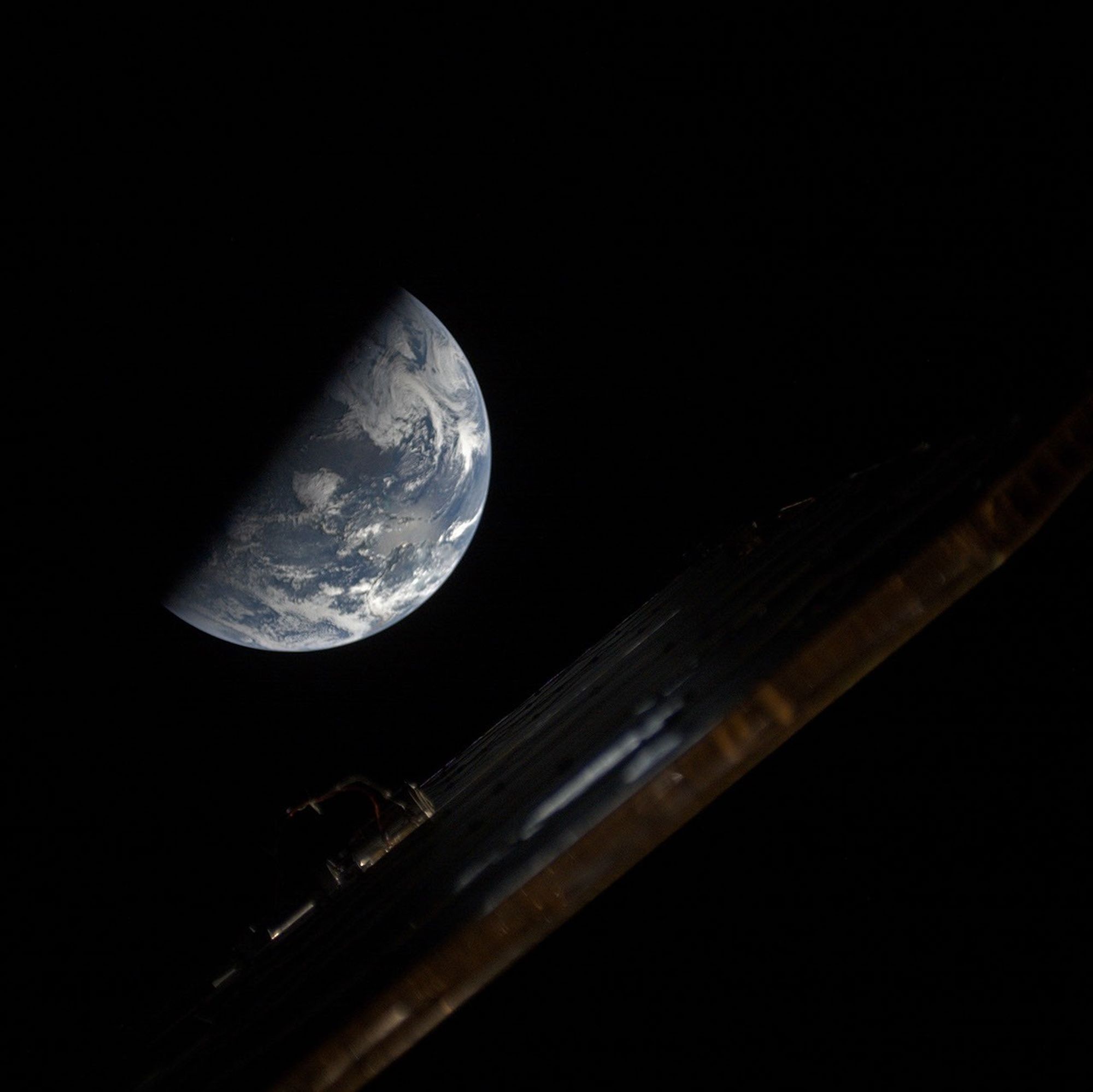
A half-lit Earth, appearing in shades of blue and white, hangs against the blackness of space in the upper left. Angled across the lower right, below Earth, a solar panel appears in shades of brown and gray.
One of NASA’s ESCAPADE spacecraft captured this visible-light image of Earth from about 38,500 miles away on Nov. 9, 2026, about 3 hours after making a close approach and performing a powered flyby of the planet to slingshot itself toward Mars. One of the spacecraft’s solar panels appears in the foreground.
NASA/UC Berkeley/Northern Arizona University

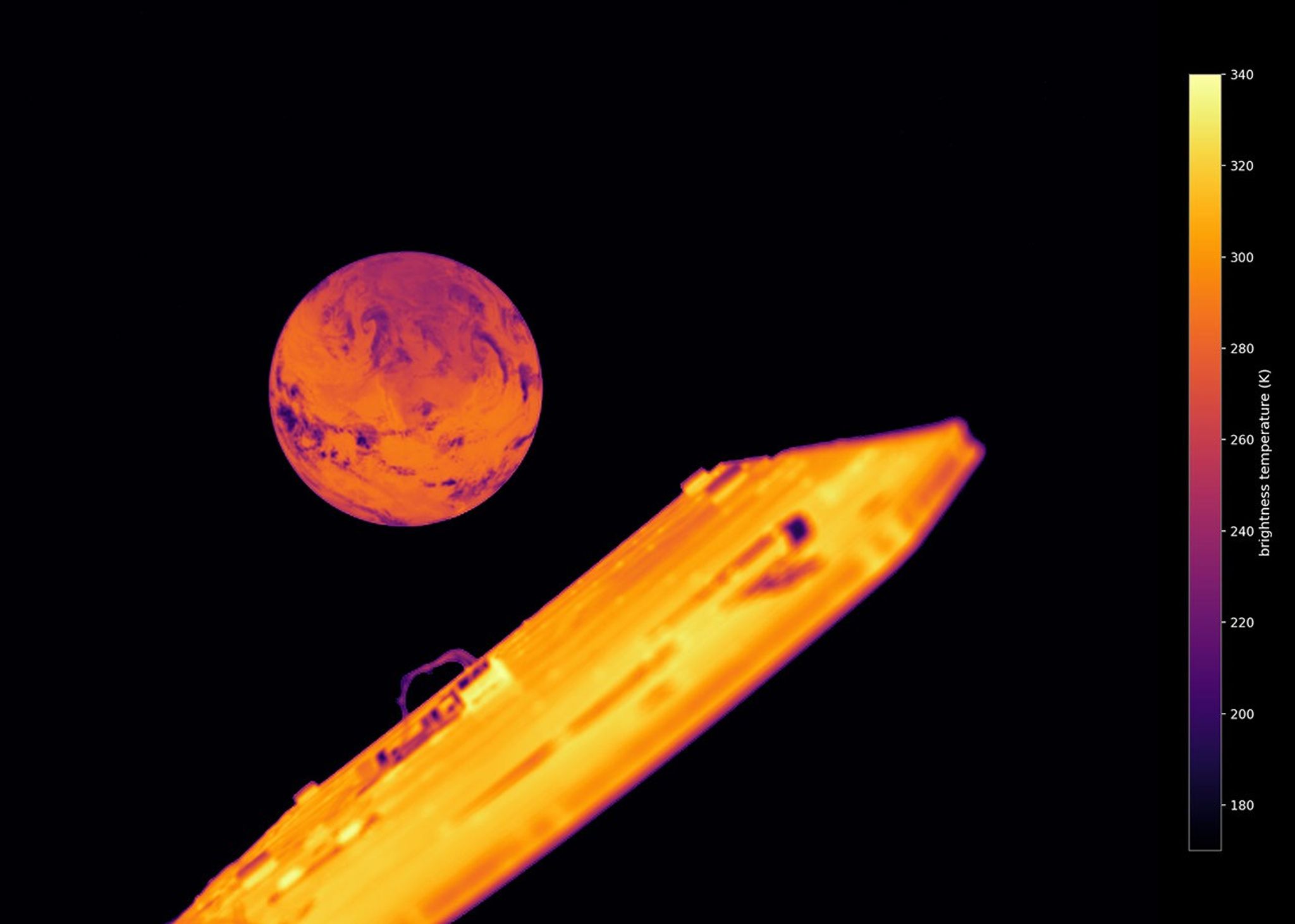
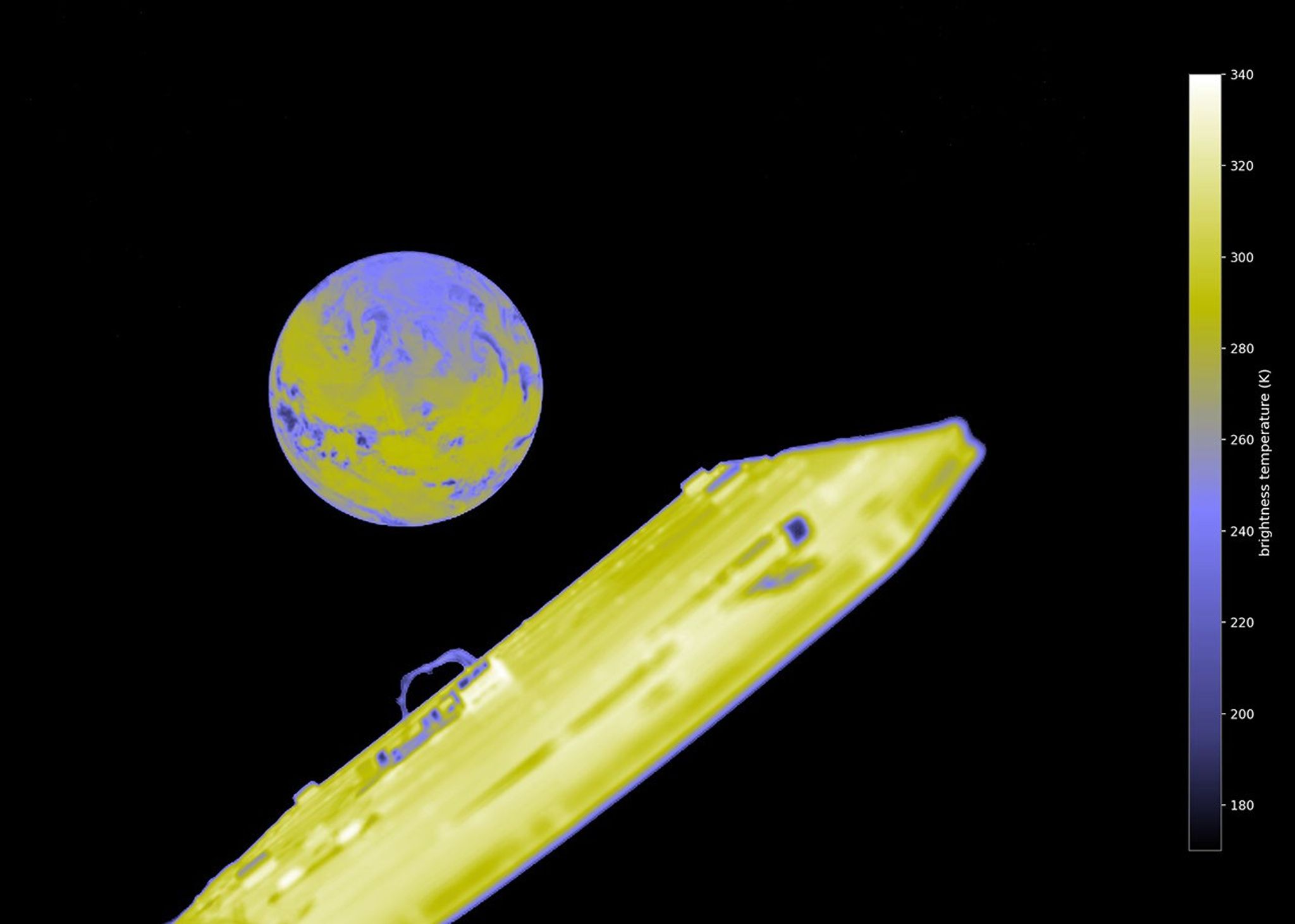
استخدمت المركبة الفضائية ESCAPADE كاميرا نظام المراقبة المرئي والأشعة تحت الحمراء، التي قدمتها جامعة شمال أريزونا، لالتقاط صور للأرض في الضوء المرئي والأشعة تحت الحمراء.

التقطت المركبة الفضائية الصور حوالي الساعة 9 صباحًا بتوقيت شرق الولايات المتحدة يوم 9 نوفمبر، أو بعد حوالي 3 ساعات من أقرب اقتراب لها من الأرض. وفي وقت التقاط الصور، كانت المركبة الفضائية على بعد حوالي 38500 ميل من الأرض، وكان بإمكانها رؤية نصف الكرة الغربي للكوكب.
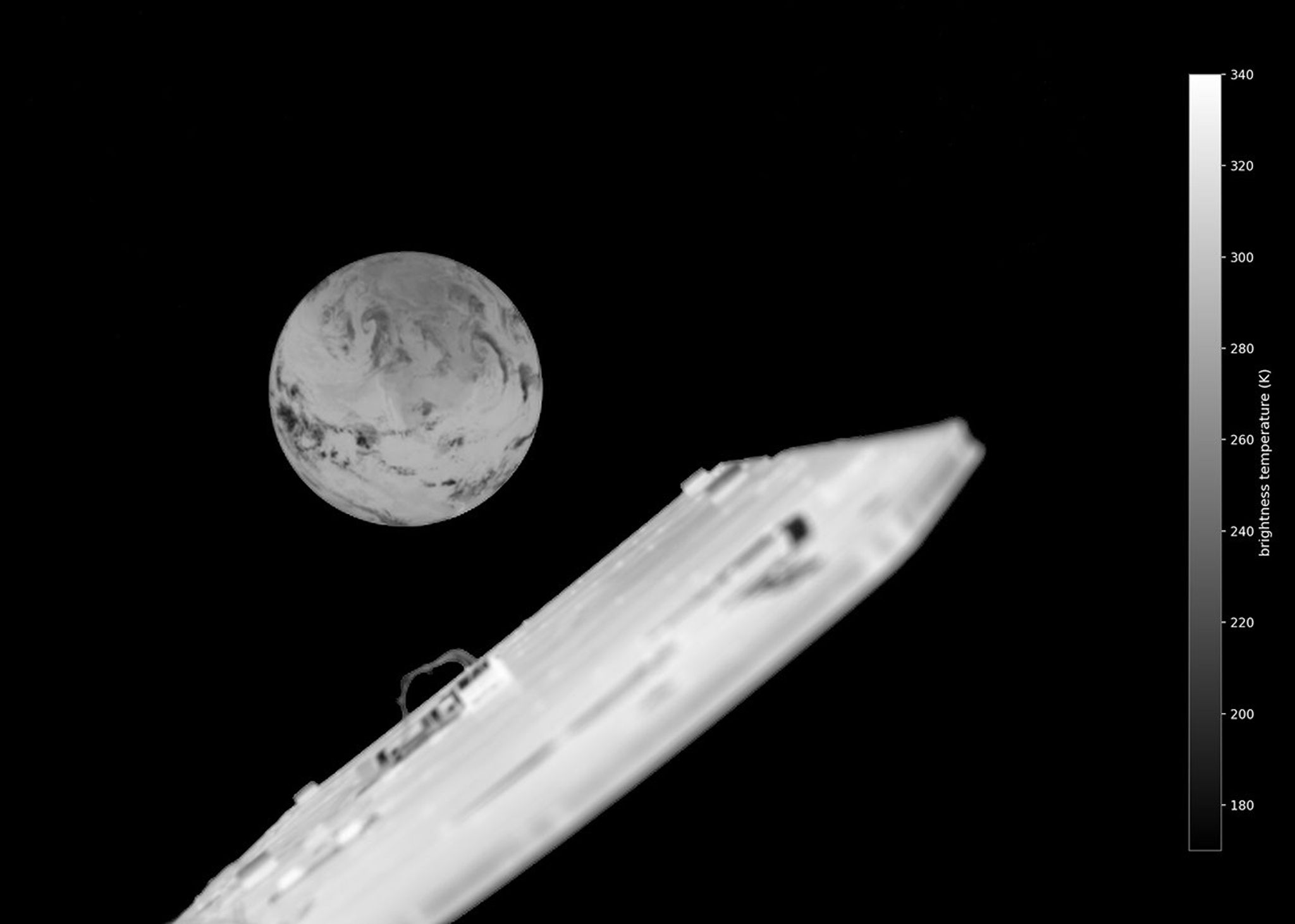
Against a black background, Earth appears in the upper left as a disk with swirling features in shades of white, black, and gray. In the bottom of the view, below Earth, a solar panel appears mostly white with a few small areas in gray or black. On the right is a scale bar, relating shades of black, gray, and white to temperatures.
One of NASA’s ESCAPADE spacecraft captured this infrared image of the Western Hemisphere of Earth from about 38,500 miles away on Nov. 9, 2026, about 3 hours after making a close approach and performing a powered flyby of the planet to slingshot itself toward Mars. One of the spacecraft’s solar panels appears in the foreground. Areas that appear brighter in the image are warmer than darker areas.
NASA/UC Berkeley/Northern Arizona University
Against a black background, Earth appears in the upper left as a disk with swirling features in shades of orange, yellow, blue, and purple. In the bottom of the view, below Earth, a solar panel appears mostly yellow and orange with a few small areas in dark blue and purple. On the right is a scale bar, relating colors to temperatures.
One of NASA’s ESCAPADE spacecraft captured this infrared image of the Western Hemisphere of Earth from about 38,500 miles away on Nov. 9, 2026, about 3 hours after making a close approach and performing a powered flyby of the planet to slingshot itself toward Mars. One of the spacecraft’s solar panels appears in the foreground. In the color scale applied here, areas that appear in white, yellow, and orange are warmer than areas in blue and purple.
NASA/UC Berkeley/Northern Arizona University
Against a black background, Earth appears in the upper left as a disk with swirling features in shades of yellow, blue, and green. In the bottom of the view, below Earth, a solar panel appears mostly yellow and green with a few small areas in dark blue. On the right is a scale bar, relating colors to temperatures.
One of NASA’s ESCAPADE spacecraft captured this infrared image of the Western Hemisphere of Earth from about 38,500 miles away on Nov. 9, 2026, about 3 hours after making a close approach and performing a powered flyby of the planet to slingshot itself toward Mars. One of the spacecraft’s solar panels appears in the foreground. In the color scale applied here, areas that appear in white, yellow, and green are warmer than areas in shades of blue.
NASA/UC Berkeley/Northern Arizona University

هذه المشاهد مأخوذة من المركبة الفضائية الثانية من مركبتي ESCAPADE التي ستقوم بالتحليق بالقرب من الأرض هذا الشهر. حلقت كلتا المركبتين الفضائيتين بالقرب من الأرض، ودمجتا بين احتراق المحرك وجاذبية كوكبنا لدفع نفسيهما في رحلة مدتها 10 أشهر إلى المريخ. بمجرد وصولها إلى مدارها حول المريخ، ستقوم المهمة بدراسة كيفية تفاعل الرياح الشمسية، وهي تيار من الجسيمات تصل سرعتها إلى مليون ميل في الساعة، مع بيئة المريخ وتؤدي إلى فقدان الغلاف الجوي على الكوكب الأحمر.

عندما اقتربت المركبتان الفضائيتان ESCAPADE من الأرض، التقط قمر صناعي تجاري بعض الصور للزوج من مسافة 3000 ميل تقريبًا. كما قام أحد أعضاء فريق المهمة بتصوير المركبة الفضائية وهي تمر في سماء منزله بالقرب من لوس أنجلوس.

Three side-by-side images, all taken on November 7, 2026, each show a bright white dot at the center of a black square. Some faint gray features can be seen extending from the white dot. The first image was taken at 09:41:00 UTC at a range of 5595 km, the second at 09:41:45 UTC at a range of 5444 km, and the third at 09:44:00 UTC at a range of 5488 km.
A Vantor Worldview Legion satellite captured these three images of the first ESCAPADE spacecraft to fly by Earth. The images were taken between 4:41 and 4:44 a.m. EST on Nov. 7, just before the ESCAPADE spacecraft made its closest approach to Earth. At the time, the Vantor satellite was between 3,380 and 3,480 miles away from the ESCAPADE spacecraft.
Vantor
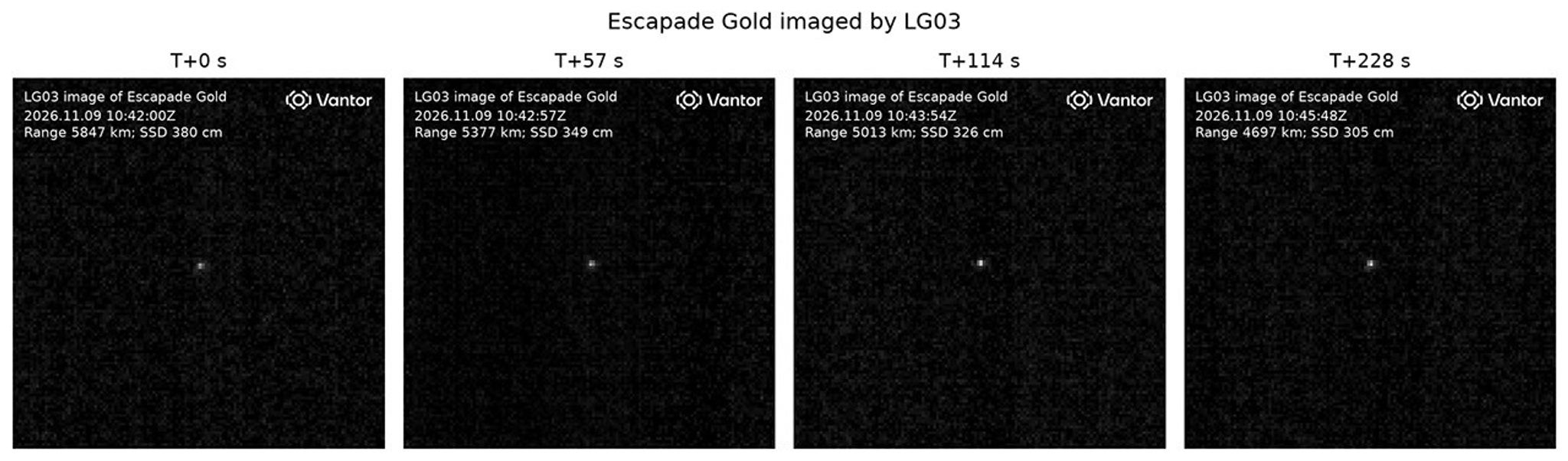
Four side-by-side images, all taken on November 9, 2026, each show a bright white dot at the center of a black square. Some faint gray features can be seen extending from the white dot. The first image was taken at 10:42:00 UTC at a range of 5847 km, the second at 10:42:57 UTC at a range of 5377 km, the third at 10:43:54 UTC at a range of 5013 km, and the fourth at 10:45:48 UTC at a range of 4697 km.
A Vantor Worldview Legion satellite captured these four images of the second ESCAPADE spacecraft to fly by Earth. The images were taken between 5:42 and 5:45 a.m. EST on Nov. 9, just before the ESCAPADE spacecraft made its closest approach to Earth. At the time, the Vantor satellite was between 2,910 and 3,640 miles away from the ESCAPADE spacecraft.
Vantor

يتم تمويل مهمة ESCAPADE من قبل قسم الفيزياء الشمسية التابع لناسا وهي جزء من برنامج ناسا للبعثات المبتكرة الصغيرة لاستكشاف الكواكب. يقود مختبر علوم الفضاء بجامعة كاليفورنيا في بيركلي المهمة مع الشركاء الرئيسيين Rocket Lab؛ ومركز جودارد لرحلات الفضاء التابع لناسا في جرينبيلت بولاية ماريلاند؛ جامعة إمبري ريدل للطيران؛ الفضاء المتقدم؛ و بلو أوريجن.

Against a black background with a couple dozen stars, two dashed lines appear side by side from top to bottom. The dashes on the left are blue and the dashes on the right are gold.
As the two ESCAPADE spacecraft flew close to Earth one by one, two days apart, the mission’s chief engineer from Rocket Lab, where the spacecraft were built, photographed them crossing through the same part of sky as seen from the Los Angeles area. This composite image combines a series of 5-second exposures, showing the spacecraft as streaks moving relative to background stars. The faint streaks were enhanced and colorized in processing. The first spacecraft, which completed its flyby on Nov. 7, appears on the left and is colorized in blue. The second spacecraft, which completed its flyby on Nov. 9, appears on the right and is colorized in gold.

المصدر الأصلي

بعد إكمال رحلة طيران ناجحة حول الأرض، التقطت إحدى المركبات الفضائية التوأم ESCAPADE (Escape and Plasma Acceleration and Dynamics Explorers) التابعة لناسا صورًا وداعية لكوكبها الأصلي قبل التوجه إلى المريخ.

A half-lit Earth, appearing in shades of blue and white, hangs against the blackness of space in the upper left. Angled across the lower right, below Earth, a solar panel appears in shades of brown and gray.
One of NASA’s ESCAPADE spacecraft captured this visible-light image of Earth from about 38,500 miles away on Nov. 9, 2026, about 3 hours after making a close approach and performing a powered flyby of the planet to slingshot itself toward Mars. One of the spacecraft’s solar panels appears in the foreground.
NASA/UC Berkeley/Northern Arizona University

استخدمت المركبة الفضائية ESCAPADE كاميرا نظام المراقبة المرئي والأشعة تحت الحمراء، التي قدمتها جامعة شمال أريزونا، لالتقاط صور للأرض في الضوء المرئي والأشعة تحت الحمراء.

التقطت المركبة الفضائية الصور حوالي الساعة 9 صباحًا بتوقيت شرق الولايات المتحدة يوم 9 نوفمبر، أو بعد حوالي 3 ساعات من أقرب اقتراب لها من الأرض. وفي وقت التقاط الصور، كانت المركبة الفضائية على بعد حوالي 38500 ميل من الأرض، وكان بإمكانها رؤية نصف الكرة الغربي للكوكب.
Against a black background, Earth appears in the upper left as a disk with swirling features in shades of white, black, and gray. In the bottom of the view, below Earth, a solar panel appears mostly white with a few small areas in gray or black. On the right is a scale bar, relating shades of black, gray, and white to temperatures.
One of NASA’s ESCAPADE spacecraft captured this infrared image of the Western Hemisphere of Earth from about 38,500 miles away on Nov. 9, 2026, about 3 hours after making a close approach and performing a powered flyby of the planet to slingshot itself toward Mars. One of the spacecraft’s solar panels appears in the foreground. Areas that appear brighter in the image are warmer than darker areas.
NASA/UC Berkeley/Northern Arizona University
Against a black background, Earth appears in the upper left as a disk with swirling features in shades of orange, yellow, blue, and purple. In the bottom of the view, below Earth, a solar panel appears mostly yellow and orange with a few small areas in dark blue and purple. On the right is a scale bar, relating colors to temperatures.
One of NASA’s ESCAPADE spacecraft captured this infrared image of the Western Hemisphere of Earth from about 38,500 miles away on Nov. 9, 2026, about 3 hours after making a close approach and performing a powered flyby of the planet to slingshot itself toward Mars. One of the spacecraft’s solar panels appears in the foreground. In the color scale applied here, areas that appear in white, yellow, and orange are warmer than areas in blue and purple.
NASA/UC Berkeley/Northern Arizona University
Against a black background, Earth appears in the upper left as a disk with swirling features in shades of yellow, blue, and green. In the bottom of the view, below Earth, a solar panel appears mostly yellow and green with a few small areas in dark blue. On the right is a scale bar, relating colors to temperatures.
One of NASA’s ESCAPADE spacecraft captured this infrared image of the Western Hemisphere of Earth from about 38,500 miles away on Nov. 9, 2026, about 3 hours after making a close approach and performing a powered flyby of the planet to slingshot itself toward Mars. One of the spacecraft’s solar panels appears in the foreground. In the color scale applied here, areas that appear in white, yellow, and green are warmer than areas in shades of blue.
NASA/UC Berkeley/Northern Arizona University

هذه المشاهد مأخوذة من المركبة الفضائية الثانية من مركبتي ESCAPADE التي ستقوم بالتحليق بالقرب من الأرض هذا الشهر. حلقت كلتا المركبتين الفضائيتين بالقرب من الأرض، ودمجتا بين احتراق المحرك وجاذبية كوكبنا لدفع نفسيهما في رحلة مدتها 10 أشهر إلى المريخ. بمجرد وصولها إلى مدارها حول المريخ، ستقوم المهمة بدراسة كيفية تفاعل الرياح الشمسية، وهي تيار من الجسيمات تصل سرعتها إلى مليون ميل في الساعة، مع بيئة المريخ وتؤدي إلى فقدان الغلاف الجوي على الكوكب الأحمر.

عندما اقتربت المركبتان الفضائيتان ESCAPADE من الأرض، التقط قمر صناعي تجاري بعض الصور للزوج من مسافة 3000 ميل تقريبًا. كما قام أحد أعضاء فريق المهمة بتصوير المركبة الفضائية وهي تمر في سماء منزله بالقرب من لوس أنجلوس.
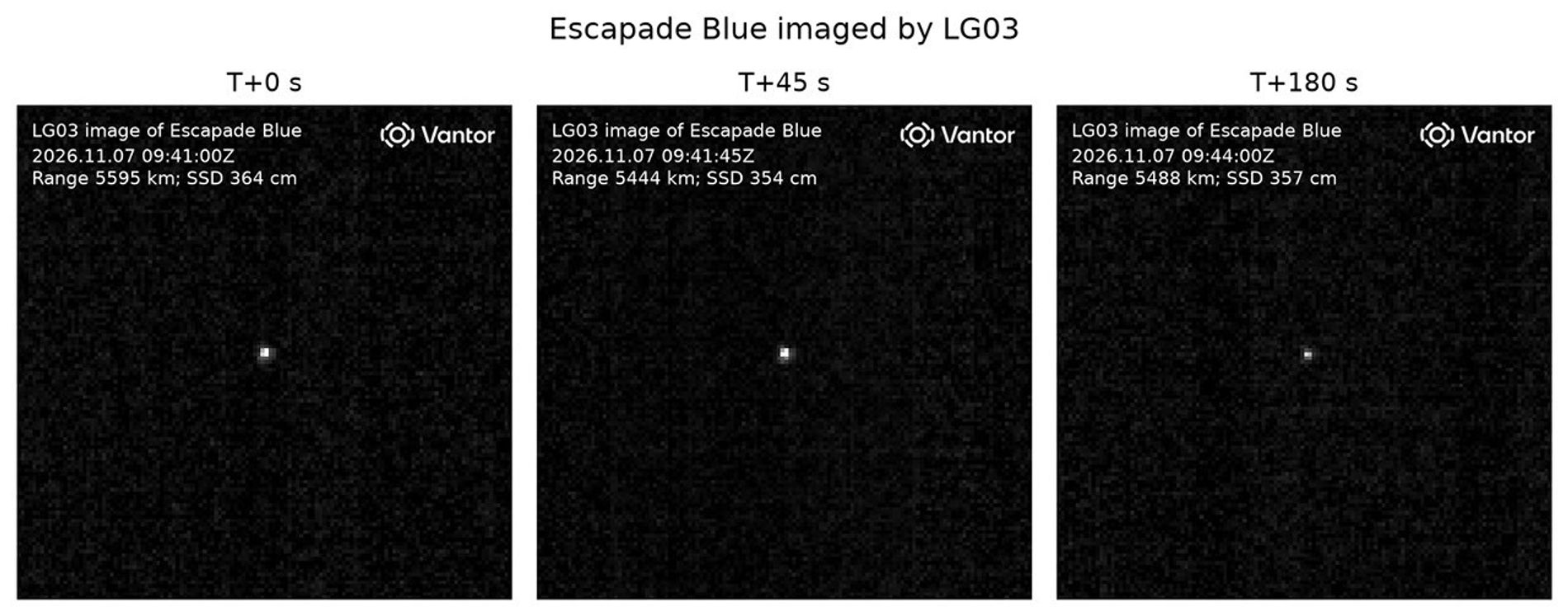
Three side-by-side images, all taken on November 7, 2026, each show a bright white dot at the center of a black square. Some faint gray features can be seen extending from the white dot. The first image was taken at 09:41:00 UTC at a range of 5595 km, the second at 09:41:45 UTC at a range of 5444 km, and the third at 09:44:00 UTC at a range of 5488 km.
A Vantor Worldview Legion satellite captured these three images of the first ESCAPADE spacecraft to fly by Earth. The images were taken between 4:41 and 4:44 a.m. EST on Nov. 7, just before the ESCAPADE spacecraft made its closest approach to Earth. At the time, the Vantor satellite was between 3,380 and 3,480 miles away from the ESCAPADE spacecraft.
Vantor
Four side-by-side images, all taken on November 9, 2026, each show a bright white dot at the center of a black square. Some faint gray features can be seen extending from the white dot. The first image was taken at 10:42:00 UTC at a range of 5847 km, the second at 10:42:57 UTC at a range of 5377 km, the third at 10:43:54 UTC at a range of 5013 km, and the fourth at 10:45:48 UTC at a range of 4697 km.
A Vantor Worldview Legion satellite captured these four images of the second ESCAPADE spacecraft to fly by Earth. The images were taken between 5:42 and 5:45 a.m. EST on Nov. 9, just before the ESCAPADE spacecraft made its closest approach to Earth. At the time, the Vantor satellite was between 2,910 and 3,640 miles away from the ESCAPADE spacecraft.
Vantor

يتم تمويل مهمة ESCAPADE من قبل قسم الفيزياء الشمسية التابع لناسا وهي جزء من برنامج ناسا للبعثات المبتكرة الصغيرة لاستكشاف الكواكب. يقود مختبر علوم الفضاء بجامعة كاليفورنيا في بيركلي المهمة مع الشركاء الرئيسيين Rocket Lab؛ ومركز جودارد لرحلات الفضاء التابع لناسا في جرينبيلت بولاية ماريلاند؛ جامعة إمبري ريدل للطيران؛ الفضاء المتقدم؛ و بلو أوريجن.
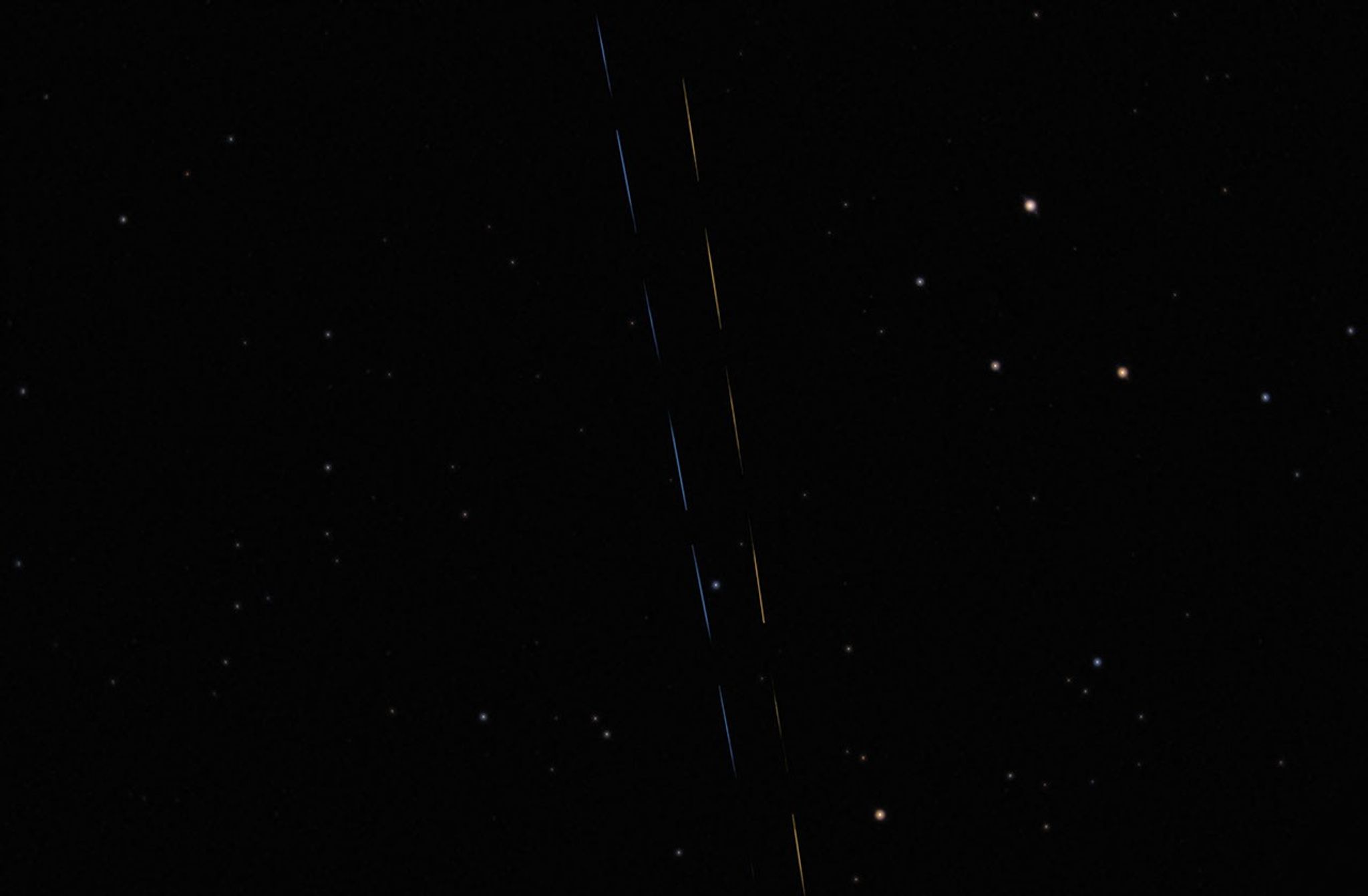
Against a black background with a couple dozen stars, two dashed lines appear side by side from top to bottom. The dashes on the left are blue and the dashes on the right are gold.
As the two ESCAPADE spacecraft flew close to Earth one by one, two days apart, the mission’s chief engineer from Rocket Lab, where the spacecraft were built, photographed them crossing through the same part of sky as seen from the Los Angeles area. This composite image combines a series of 5-second exposures, showing the spacecraft as streaks moving relative to background stars. The faint streaks were enhanced and colorized in processing. The first spacecraft, which completed its flyby on Nov. 7, appears on the left and is colorized in blue. The second spacecraft, which completed its flyby on Nov. 9, appears on the right and is colorized in gold.

المصدر الأصلي

بعد إكمال رحلة طيران ناجحة حول الأرض، التقطت إحدى المركبات الفضائية التوأم ESCAPADE (Escape and Plasma Acceleration and Dynamics Explorers) التابعة لناسا صورًا وداعية لكوكبها الأصلي قبل التوجه إلى المريخ.

A half-lit Earth, appearing in shades of blue and white, hangs against the blackness of space in the upper left. Angled across the lower right, below Earth, a solar panel appears in shades of brown and gray.
One of NASA’s ESCAPADE spacecraft captured this visible-light image of Earth from about 38,500 miles away on Nov. 9, 2026, about 3 hours after making a close approach and performing a powered flyby of the planet to slingshot itself toward Mars. One of the spacecraft’s solar panels appears in the foreground.
NASA/UC Berkeley/Northern Arizona University

استخدمت المركبة الفضائية ESCAPADE كاميرا نظام المراقبة المرئي والأشعة تحت الحمراء، التي قدمتها جامعة شمال أريزونا، لالتقاط صور للأرض في الضوء المرئي والأشعة تحت الحمراء.

التقطت المركبة الفضائية الصور حوالي الساعة 9 صباحًا بتوقيت شرق الولايات المتحدة يوم 9 نوفمبر، أو بعد حوالي 3 ساعات من أقرب اقتراب لها من الأرض. وفي وقت التقاط الصور، كانت المركبة الفضائية على بعد حوالي 38500 ميل من الأرض، وكان بإمكانها رؤية نصف الكرة الغربي للكوكب.

Against a black background, Earth appears in the upper left as a disk with swirling features in shades of white, black, and gray. In the bottom of the view, below Earth, a solar panel appears mostly white with a few small areas in gray or black. On the right is a scale bar, relating shades of black, gray, and white to temperatures.
One of NASA’s ESCAPADE spacecraft captured this infrared image of the Western Hemisphere of Earth from about 38,500 miles away on Nov. 9, 2026, about 3 hours after making a close approach and performing a powered flyby of the planet to slingshot itself toward Mars. One of the spacecraft’s solar panels appears in the foreground. Areas that appear brighter in the image are warmer than darker areas.
NASA/UC Berkeley/Northern Arizona University
Against a black background, Earth appears in the upper left as a disk with swirling features in shades of orange, yellow, blue, and purple. In the bottom of the view, below Earth, a solar panel appears mostly yellow and orange with a few small areas in dark blue and purple. On the right is a scale bar, relating colors to temperatures.
One of NASA’s ESCAPADE spacecraft captured this infrared image of the Western Hemisphere of Earth from about 38,500 miles away on Nov. 9, 2026, about 3 hours after making a close approach and performing a powered flyby of the planet to slingshot itself toward Mars. One of the spacecraft’s solar panels appears in the foreground. In the color scale applied here, areas that appear in white, yellow, and orange are warmer than areas in blue and purple.
NASA/UC Berkeley/Northern Arizona University
Against a black background, Earth appears in the upper left as a disk with swirling features in shades of yellow, blue, and green. In the bottom of the view, below Earth, a solar panel appears mostly yellow and green with a few small areas in dark blue. On the right is a scale bar, relating colors to temperatures.
One of NASA’s ESCAPADE spacecraft captured this infrared image of the Western Hemisphere of Earth from about 38,500 miles away on Nov. 9, 2026, about 3 hours after making a close approach and performing a powered flyby of the planet to slingshot itself toward Mars. One of the spacecraft’s solar panels appears in the foreground. In the color scale applied here, areas that appear in white, yellow, and green are warmer than areas in shades of blue.
NASA/UC Berkeley/Northern Arizona University

هذه المشاهد مأخوذة من المركبة الفضائية الثانية من مركبتي ESCAPADE التي ستقوم بالتحليق بالقرب من الأرض هذا الشهر. حلقت كلتا المركبتين الفضائيتين بالقرب من الأرض، ودمجتا بين احتراق المحرك وجاذبية كوكبنا لدفع نفسيهما في رحلة مدتها 10 أشهر إلى المريخ. بمجرد وصولها إلى مدارها حول المريخ، ستقوم المهمة بدراسة كيفية تفاعل الرياح الشمسية، وهي تيار من الجسيمات تصل سرعتها إلى مليون ميل في الساعة، مع بيئة المريخ وتؤدي إلى فقدان الغلاف الجوي على الكوكب الأحمر.

عندما اقتربت المركبتان الفضائيتان ESCAPADE من الأرض، التقط قمر صناعي تجاري بعض الصور للزوج من مسافة 3000 ميل تقريبًا. كما قام أحد أعضاء فريق المهمة بتصوير المركبة الفضائية وهي تمر في سماء منزله بالقرب من لوس أنجلوس.

Three side-by-side images, all taken on November 7, 2026, each show a bright white dot at the center of a black square. Some faint gray features can be seen extending from the white dot. The first image was taken at 09:41:00 UTC at a range of 5595 km, the second at 09:41:45 UTC at a range of 5444 km, and the third at 09:44:00 UTC at a range of 5488 km.
A Vantor Worldview Legion satellite captured these three images of the first ESCAPADE spacecraft to fly by Earth. The images were taken between 4:41 and 4:44 a.m. EST on Nov. 7, just before the ESCAPADE spacecraft made its closest approach to Earth. At the time, the Vantor satellite was between 3,380 and 3,480 miles away from the ESCAPADE spacecraft.
Vantor
Four side-by-side images, all taken on November 9, 2026, each show a bright white dot at the center of a black square. Some faint gray features can be seen extending from the white dot. The first image was taken at 10:42:00 UTC at a range of 5847 km, the second at 10:42:57 UTC at a range of 5377 km, the third at 10:43:54 UTC at a range of 5013 km, and the fourth at 10:45:48 UTC at a range of 4697 km.
A Vantor Worldview Legion satellite captured these four images of the second ESCAPADE spacecraft to fly by Earth. The images were taken between 5:42 and 5:45 a.m. EST on Nov. 9, just before the ESCAPADE spacecraft made its closest approach to Earth. At the time, the Vantor satellite was between 2,910 and 3,640 miles away from the ESCAPADE spacecraft.
Vantor

يتم تمويل مهمة ESCAPADE من قبل قسم الفيزياء الشمسية التابع لناسا وهي جزء من برنامج ناسا للبعثات المبتكرة الصغيرة لاستكشاف الكواكب. يقود مختبر علوم الفضاء بجامعة كاليفورنيا في بيركلي المهمة مع الشركاء الرئيسيين Rocket Lab؛ ومركز جودارد لرحلات الفضاء التابع لناسا في جرينبيلت بولاية ماريلاند؛ جامعة إمبري ريدل للطيران؛ الفضاء المتقدم؛ و بلو أوريجن.

Against a black background with a couple dozen stars, two dashed lines appear side by side from top to bottom. The dashes on the left are blue and the dashes on the right are gold.
As the two ESCAPADE spacecraft flew close to Earth one by one, two days apart, the mission’s chief engineer from Rocket Lab, where the spacecraft were built, photographed them crossing through the same part of sky as seen from the Los Angeles area. This composite image combines a series of 5-second exposures, showing the spacecraft as streaks moving relative to background stars. The faint streaks were enhanced and colorized in processing. The first spacecraft, which completed its flyby on Nov. 7, appears on the left and is colorized in blue. The second spacecraft, which completed its flyby on Nov. 9, appears on the right and is colorized in gold.

المصدر الأصلي

💬 Comments (0)

No comments yet. Be the first to comment!

Leave a Comment